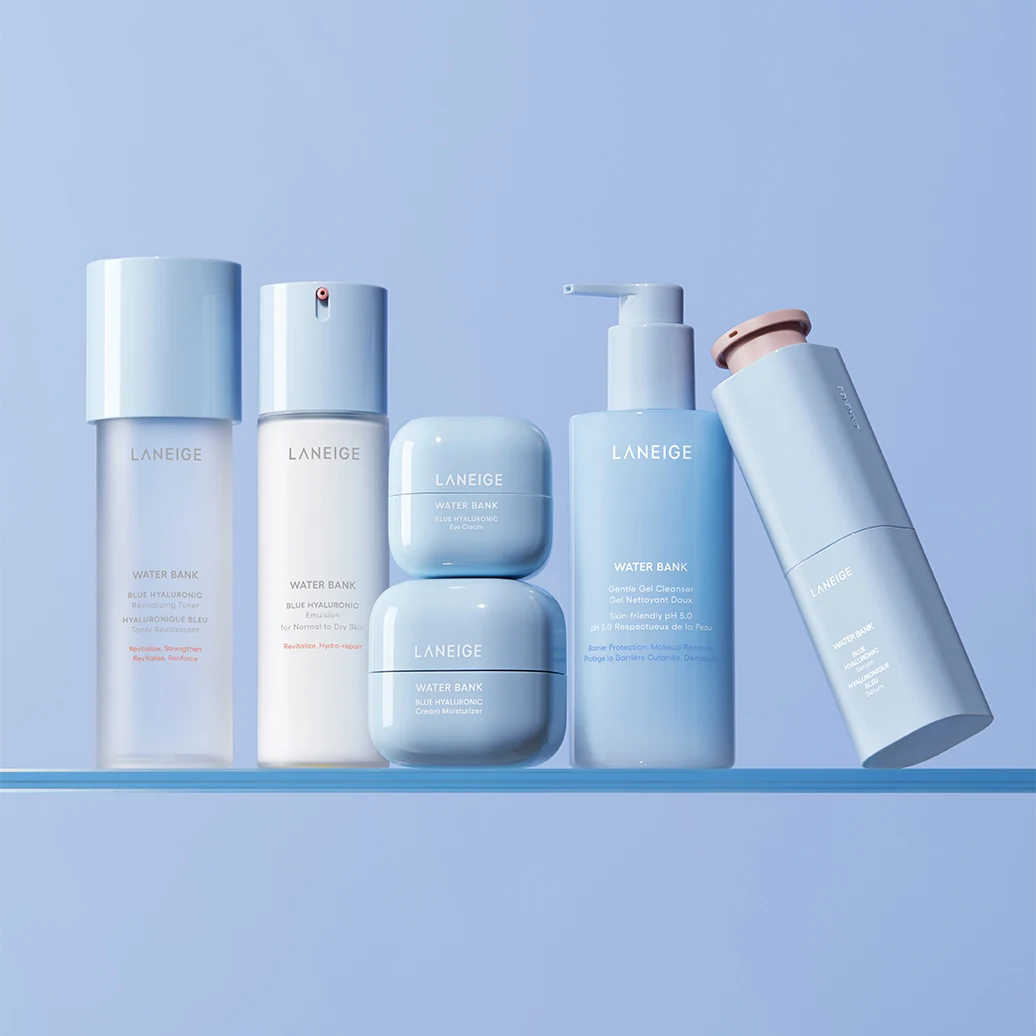
Have you ever experienced your skin becoming dry during seasonal changes, feeling tight after cleansing, and your makeup easily flaking? When the skin barrier weakens, moisture easily escapes, the skin becomes sensitive to external stimuli, and the overall skin condition can feel unstable. If your concerns are "barrier care," "enhanced moisturizing," or "dry skin management," the ingredient that comes to mind is Ceramide. As a lipid component that naturally exists in our skin, it is widely used as a cosmetic ingredient as a key component of the skin barrier.

While Ceramide is an ingredient with a long research history in the field of dermatology, how it works in cosmetics may differ from its applications in medical research. For those concerned about dry skin or barrier damage, or who wish to choose cosmetics based on ingredients, we explore Ceramide from the perspective of a cosmetic ingredient and introduce how it can be incorporated into your skincare routine.

Ceramide at a Glance

CategoryKey SummaryCheck Point
Ingredient Name
Ceramide
Labeled in various forms such as Ceramide NP, Ceramide AP, Ceramide EOP
Ingredient Classification
Sphingolipid-class lipid [1]
A structure in which a sphingoid base and a fatty acid are linked by an amide bond [1]
Source
Plant-derived or synthesized through microbial fermentation [2]
Animal-derived (bovine central nervous system) raw materials are banned from cosmetic use by the FDA, and plant-derived raw materials are mainly used [2]
Expected Skin Benefits
Improved sense of skin hydration, relief of tightness, smoother skin texture, a sense of defense against external stimuli
Gradual and cumulative rather than dramatic is common
Functions in Research
Skin barrier function, moisture retention, regulation of cellular processes [3]
Based on medical applications; cosmetic results vary by individual
Suitable Skin Types
Generally usable on various skin types [4]; dry skin, sensitive skin, barrier-damaged skin
Consultation with a specialist is recommended for existing skin concerns
Precautions
The CIR Expert Panel concluded that it is safe at current usage concentrations and methods [4]
Possible irritation from co-formulated ingredients should be checked

What is Ceramide?

Ceramide is the main lipid component of the lamellar sheets present in the intercellular spaces of the stratum corneum. These lamellar sheets provide the epidermal barrier function, and the intercellular lipid region is composed of ceramides, free fatty acids, and cholesterol in equimolar concentrations. [8] Ceramides are a structurally complex and heterogeneous group of sphingolipids in which a sphingosine base and various fatty acids are linked by amide bonds. Ceramides show differences in chain size, type, and size of hydroxylation, and degree of saturation, and these differences create the diversity of epidermal sphingolipids. [8]

The term ceramide is derived from the Latin "cera (wax)" and "amide," reflecting its wax-like properties and chemical structure. These molecules are composed of sphingosine and a fatty acid linked by an amide bond, making them a key component of the skin's natural moisturizing system. [3] Ceramides are lipids that make up about 50% of the epidermis (the outer layer of the skin). They help maintain skin moisture and support the skin barrier. [9]

Ceramides are mainly synthesized in the endoplasmic reticulum (ER) of the spinous layer within the epidermis. They move out of the cell via lamellar bodies produced in the granular layer and form a multilayered lamellar barrier between the corneocytes of the stratum corneum. [5] Ceramides are synthesized through three main pathways: de novo synthesis, sphingomyelin hydrolysis, and the salvage pathway. [3]

Differences Between Ceramide and Similar Ingredients

There are similar ingredients often mentioned alongside Ceramide. Understanding the characteristics of each ingredient is helpful when checking a product's ingredient list.

Ingredient NameCharacteristics
Ceramide NP
A form in which a saturated fatty acid (stearic acid) is N-acylated onto a phytosphingosine backbone [10]; excellent for moisturizing and soothing, suitable for dry and sensitive skin [11]
Ceramide AP
Supports skin barrier care; helps aging or thinning skin [11]
Ceramide EOP
Helps strengthen structure and restore a damaged barrier [11]
Pseudo-ceramide
A synthetic ceramide that is free of contaminants and more stable than natural ceramide, so it is more commonly used in cosmetics [12]

When ceramide is formulated together with cholesterol and fatty acids, it is organized into a stronger and more resilient structure. This combination of three is called the skin's lipid system and is a widely used combination for barrier-support-focused skincare. [11]

Benefits of Ceramide

When discussing Ceramide in cosmetics, the key point is "as a key lipid component that makes up the skin barrier, contributing to moisture retention and defense against external stimuli." Based on the research accumulated in the medical field, the benefits you can expect from cosmetics are summarized as follows.

1. Strengthening the Skin Barrier and Retaining Moisture

Prolonged exposure to dry environments or air conditioning and heating can leave skin feeling tight and prone to flaking. Ceramides hold corneocytes together and reach the intercellular matrix to weave the skin together, maintaining skin integrity. The ordered arrangement of lipids forms an occlusive system that prevents transepidermal water loss (TEWL) and makes the stratum corneum more impermeable. [6] According to clinical studies, the topical application of ceramide-based moisturizers alleviates dryness, restores barrier integrity, and improves skin moisture. [3] However, in cosmetics, it works primarily at the skin's surface, so the perceived effect is gradual and cumulative.

2. Smoother Skin Texture and Makeup Adhesion

When the skin's surface is rough and dry, makeup tends to flake, and skin tone appears uneven. An increase in the total amount of ceramides, free fatty acids, and cholesterol correlates with improvement in skin dryness, providing additional evidence that lipids play an important role in maintaining good stratum corneum moisture and barrier function. [7] This effect can be experienced when using cosmetics but may vary depending on individual skin condition and environment.

3. Protecting the Skin from External Stimuli

When the skin barrier weakens due to environmental stress or seasonal changes, moisture loss accelerates, and skin can become more sensitive to external irritants. Think of the skin barrier as armor. It prevents harmful things from penetrating into the delicate living tissue below. Ceramides help block harmful elements. [9] This can indirectly contribute to maintaining skin barrier function.

4. Skin Condition Stabilization

As we age, the ceramide content of the skin naturally decreases. Age-related changes in epidermal lipids, including ceramides, have been reported in research, which can lead to dryness, irritation, and impaired skin barrier function. [3] As we age, the skin's ceramide levels naturally decline, which can lead to dryness, wrinkles, and reduced elasticity. Ceramide-containing skincare can complement the skin barrier and help retain moisture. [24] However, unlike medical procedures, topical application through cosmetics works primarily at the skin's surface, so any improvement is felt gradually.

5. Combination with Other Ingredients

Ceramide can offer synergistic effects when used together with various active ingredients. To maximize skin health, use this lipid together with other good ingredients in your skincare products. Ceramides work well with emollients (which form a film on the skin to relieve dryness and itching), humectants (which attract and bind moisture to hydrate), and occlusives (which trap and retain moisture). [9] For example, when used with hyaluronic acid, hydration is strengthened, and when used with niacinamide, it can help with barrier strengthening and skin tone management.

Amorepacific's Perspective on Ceramide

Skin changes every day amid different environments and conditions. Rather than presenting a particular ingredient as the "right answer," Amorepacific has explored ways to flexibly select and use ingredients according to each individual's skin condition and goals. Ceramide is likewise an ingredient whose potential has been explored from multiple angles through long-term research.

Scientific Understanding of Ceramide Mechanism of Action

Amorepacific researchers focus on the mechanism of action of Ceramide to explore its potential in cosmetics. The main pathways of action of Ceramide mentioned in the research literature can be summarized as follows.

Lamellar structure formation and barrier function

Ceramides work in harmony to form a "brick-and-mortar" model for corneocytes and are organized regularly thanks to their head-tail structure. The lateral and lamellar organization of lipids is important for the skin's barrier function. Lateral organization is the arrangement of lipids perpendicular to the plane of the lamellar lipid organization. [6] A decrease in the level of EOS (Ceramide 1) is known to convert the orthorhombic structure of the epidermal barrier into a hexagonal gel structure, increasing moisture loss from the skin. The ceramides that play an important role in the skin's lamellar structure are EOS, NP, and EOH. Of these, EOS is considered an essential component for creating the lamellar structure. [5]

Cell signaling and differentiation regulation

Most of the ceramides produced by the de novo pathway form the epidermal barrier. Ceramides used as signaling molecules are synthesized by sphingomyelin (SM) and catabolic pathways. The synthesized ceramides are released from corneocytes to form a multilayered lamellar barrier. In addition, ceramides and their metabolites regulate apoptosis, proliferation, and differentiation of skin cells, as well as the formation of the skin barrier. [5]

Amorepacific's Ceramide Research

DermaON® Technology

Amorepacific has continued research to stabilize ceramide—a key component of the skin barrier—and increase its skin delivery efficiency. In particular, it developed "DermaON®," a high-density ceramide capsule technology that mimics the lamellar structure of the skin's lipid structure, realizing a biomimetic approach that imitates the biological structure of the skin barrier. This technology is used as a foundational technology for stably formulating ceramide ingredients and effectively applying them to the skin. [17][18]

In addition, this ceramide formulation technology contributes to complementing the skin barrier structure and increasing the durability of moisturizing, and the related technology had its technological value recognized by winning the Jang Young-sil Award, a prestigious award in the field of science and technology, in 2018. [19]

Development of Naturally Derived Materials

In terms of material research, Amorepacific continues to secure proprietary technology through the development of natural ceramides derived from traditional plant resources. Ceramide nanoparticles based on natural oils derived from traditional Korean plants have been studied for their potential role in supporting epidermal homeostasis. [20] In addition, it provides skin barrier improvement effects through "Soy Ceramide" technology derived from black beans, and is also pursuing sustainable material development by obtaining vegan certification and similar sustainable credentials. [21]

Cerapeptide and Medical Collaboration

Recently, Amorepacific has been expanding its ceramide research into the field of high-functionality skincare. Through the concept of "Cerapeptide," which combines ceramide and peptide, it is pursuing a composite design that considers both moisturizing and firmness care, and it is also proposing "Derma Tightening Barrier Capsule" technology that is designed to support both skin barrier care and skin-conditioning benefits. [22]

In addition, through joint research with medical institutions, Amorepacific confirmed that high-content ceramide moisturizers are effective in improving dry and itchy skin symptoms, and it is broadening its technology-based areas of application, such as expanding into customized skin protection research for individuals experiencing compromised skin barrier conditions. [23]

Realistic Application in Cosmetics

When applying this scientific background to cosmetics, several practical considerations are necessary.

In the cosmetics industry, ceramides are used for skin barrier recovery and moisturizing. However, their low water solubility necessitates the development of effective delivery systems. [3] A significant portion of the research evidence was accumulated in the contexts of pharmaceuticals, medical devices, and professional procedures, and cosmetics work primarily at the skin's surface and the stratum corneum. Delivery technology, formulation, and formulation design determine the perceived effect, and it is advisable to approach an ingredient not as an "all-purpose solution" but as "one part of a skincare routine."

Amorepacific's Research Direction

Amorepacific is researching the potential of Ceramide from multiple angles. Building on a deep understanding of skin biology, Amorepacific comprehensively researches delivery technology and formulation stability, and considers the ethical sourcing of raw materials, environmental impact, and long-term skin health from the perspective of sustainable beauty.


Products utilizing Ceramide-related technology can be found in Amorepacific brands, including LANEIGE, INNISFREE, Mamonde, AESTURA, ILLIYOON, and others.

You can learn more about Amorepacific's research and development philosophy and technology trends at the link below.

Explore Amorepacific Research & Innovation

Ceramide Fact Check

We examine information about Ceramide that is frequently misunderstood or exaggerated to gain a more balanced understanding of its characteristics as a cosmetic ingredient.

QuestionFact Check
Does Ceramide guarantee skin regeneration?
In the cosmetics industry, ceramides are used for skin barrier recovery and moisturizing. [3] It does not "guarantee" regeneration but can help support barrier function.
Can using Ceramide cosmetics produce the effects of a procedure?
Ceramides are used in cosmetics, and companies claim effects of reducing dryness, lines, and wrinkles, but there are not enough clinical studies to support this, and companies have not presented strong evidence. [8] Procedures and cosmetics work in different ways.
Is Ceramide suitable for all skin types?
Ceramides can generally be used on various skin types. [4] However, individual results may vary depending on co-formulated ingredients.
Do I see immediate effects when I apply Ceramide?
In one study, a single application of a ceramide-rich moisturizer increased skin moisture and reduced transepidermal water loss for up to 24 hours. You can feel immediate hydration, but barrier strengthening requires consistent use.
Is a higher concentration of Ceramide always better?
The maximum usage concentration range for Ceramide 3 is from 1.0 x 10⁻⁸% to 0.2%, with 0.2% reported for lipsticks and face/neck skincare products. [13] Appropriate concentration and formula design are more important.
Is Ceramide extracted from only one source?
Natural ceramides are found in human skin, animal skin, wheat germ, rice bran, and certain plant raw materials such as konjac. Plants and animals can be sources of ceramides, but extraction from natural raw materials can be cumbersome and uneconomical, so synthetic or fermentation-based ceramides are widely used in cosmetics. [25]

How to Experience Ceramide Benefits

  • Realistic Changes to Expect

With consistent use of Ceramide cosmetics, you may feel that skin tightness decreases, and hydration is retained for longer. You may experience less dryness after cleansing, softer skin texture, and improved makeup adhesion. You may also experience your skin feeling less sensitive to external environmental changes. However, these changes appear gradually and cumulatively rather than dramatically.

  • Changes That Are Difficult to Expect

It is difficult to expect groundbreaking improvement of deep wrinkles, fundamental changes in skin structure, or medical-procedure-level barrier recovery from cosmetics alone. If improvement of severe skin concerns is needed, consulting a specialist is recommended. If your main goal is improving firmness, you may consider combining other ingredients such as retinol and peptides, or professional procedures.

Safety of Ceramide

Ceramide is generally used safely as a cosmetic ingredient. However, as with all cosmetic ingredients, individual reactions may vary, so please refer to the following.

General Safety

The Expert Panel for Cosmetic Ingredient Safety (CIR) reviewed the safety of ceramides, which function mainly as hair-conditioning agents and skin-conditioning agents in cosmetics. The Expert Panel reviewed the relevant data related to these ingredients. The Panel concluded that ceramides are safe in cosmetics at the current usage practices and concentrations described in this safety assessment. [4]

Some ceramides are abundant in bovine central nervous system tissue, but the U.S. FDA prohibits the cosmetic use of ingredients derived from these tissues due to the risk of transmitting infectious agents such as bovine spongiform encephalopathy (BSE). Some ceramide ingredients can be derived from plant raw materials (such as those designated as phytosphingosine in their INCI name or definition), which do not carry the risk associated with bovine central nervous system-derived ingredients. [2]

When Caution is Needed

If you are allergic to a specific plant raw material, it is advisable to check the origin of the ingredient. There may be a possibility of irritation from other co-formulated ingredients rather than ceramide itself, so for sensitive skin, a patch test is recommended. [4] Consultation with a specialist is recommended if you have existing skin concerns.

Frequently Asked Questions (FAQ)

What exactly is Ceramide?

Ceramides are fats or lipids found in skin cells. They make up 30% to 40% of the epidermis (the outer skin layer). Ceramides are important for retaining the skin's moisture and preventing external irritants. [12] In cosmetics, they are mainly used for the purposes of strengthening the skin barrier and moisturizing.

What should sensitive skin keep in mind when using Ceramide products?

Ceramides can generally be used on various skin types. [4] However, co-formulated fragrances, alcohol, preservatives, and similar ingredients, rather than ceramide itself, can be the cause of irritation. [4] For sensitive skin, it is advisable to check the full ingredient list and perform a patch test before using a new product.

What ingredients are good to use together with Ceramide?

When ceramide is formulated together with cholesterol and fatty acids, it is organized into a stronger and more resilient structure. This combination of three is called the skin's lipid system and is known as the combination for barrier-support-focused skincare. [11] You can expect synergy with hyaluronic acid (hydration), niacinamide (barrier strengthening), panthenol (soothing), squalane (moisture retention), and similar ingredients.

Can I use Ceramide and retinol together?

They can be used together. With retinol use, the skin barrier may become temporarily sensitive, and since ceramide can help strengthen the barrier, it is a good combination. [14] However, in the early stages of retinol use, the skin needs an adaptation period, and if you feel irritation, it is advisable to adjust the frequency of use.

Can I use Ceramide together with exfoliating ingredients (AHA/BHA)?

They can be used together, but rather than using them consecutively at the same time, it is advisable to separate them by day or time. After exfoliation, the skin barrier may become temporarily sensitive, so reinforcing the barrier with ceramide is helpful.

Can I use Ceramide products right after a procedure?

It depends on the type and intensity of the procedure and the individual skin condition. In general, ceramide is a low-irritation ingredient [4], but immediately after a procedure, the guidance of the medical professional takes top priority. It is common to use ceramide for barrier care after the post-procedure recovery period has passed.

Do pores shrink when I use Ceramide cosmetics?

Pore size is determined by a combination of factors such as genetics, the amount of sebum secretion, and skin elasticity. [15] By smoothing the skin's surface, ceramide may make pores feel "less prominent," but it is difficult to expect permanent pore reduction.

When can I expect to feel the effects of Ceramide?

In one study, a single application of a ceramide-rich moisturizer increased skin moisture, reduced transepidermal water loss, and improved skin pH for up to 24 hours. These effects became more significant after 28 days, with improvements in skin hydration and skin-surface-related assessments being reported. [24] Moisture-related sensations, such as a supple feel, can be experienced relatively quickly, but barrier strengthening or improvement in skin texture is felt cumulatively through consistent use.

What are the differences between Ceramide and similar ingredients?

There are natural ceramides and synthetic ceramides. Natural ceramides are found in the outer layer of the skin, in animals such as cattle, and in plants such as soybeans. Synthetic ceramides (pseudo-ceramides) are made artificially. Because they are free of contaminants and more stable than natural ceramides, synthetic ceramides are more commonly used in skincare products. [12] Phytoceramides are plant-derived ceramides extracted from rice bran or wheat germ. [16]

By what criteria should I choose Ceramide cosmetics?

If you have sensitive skin, check the full ingredient list for potentially irritating fragrances, alcohol, and similar ingredients. Products in which ceramide is formulated together with cholesterol and fatty acids help with more effective barrier care. [11] Consider products that also contain additional ingredients suited to your purpose (hyaluronic acid for enhanced moisturizing, panthenol for soothing, etc.), and it is advisable to choose products from trustworthy brands.

Sources

The effects and technologies of ingredients described in this content are based on Amorepacific's own research and publicly available academic and scientific sources to provide a general understanding of cosmetic ingredients. It is not intended for medical diagnosis or treatment purposes. For personal medical concerns, please consult a qualified medical professional.