Have you ever experienced your skin feeling tight during seasonal changes, your makeup flaking, or your skin looking dull and lifeless in the mirror? When moisture is lacking, skin loses its elasticity, fine lines become more prominent, and overall skin tone can appear dull. If your concerns are "replenishing moisture," "hydration care," or "supple skin," the ingredient that comes to mind is Hyaluronic Acid (HA). Because it occurs naturally in our bodies and has an excellent ability to retain moisture, it is widely used as a cosmetic ingredient.

While Hyaluronic Acid is an ingredient with a long research history in the medical field, how it works in cosmetics may differ from its applications in medical research. For those concerned about dry skin or loss of elasticity, or who wish to choose cosmetics based on ingredients, we explore Hyaluronic Acid from the perspective of a cosmetic ingredient and introduce how it can be incorporated into your skincare routine.

Hyaluronic Acid at a Glance

CategoryKey SummaryCheck Point
Ingredient Name
Hyaluronic Acid (HA)
Also labeled as Sodium Hyaluronate, Potassium Hyaluronate, Hydrolyzed Hyaluronic Acid, and others
Ingredient Classification
Glycosaminoglycan (polysaccharide)
A linear polysaccharide composed of repeating disaccharide units of N-acetylglucosamine and D-glucuronic acid [1]
Source
Bacterial fermentation or animal-derived (rooster comb)
Hyaluronic Acid used in cosmetics is extracted through bacterial fermentation or from rooster combs, then purified to remove impurities [2]
Expected Skin Benefits
Hydration, moisture retention, smoother skin texture, support for skin firmness, barrier support
Gradual and cumulative rather than dramatic. Individual results vary by skin type and environment
Functions in Research
The ability to hold more than a thousand times its own weight in water [3]
Much of the research is based on medical applications (such as fillers), and cosmetic results vary by individual [5]
Suitable Skin Types
Dry, dehydrated oily, combination, and sensitive skin
Consultation with a specialist is recommended for specific skin concerns
Precautions
Most reported adverse reactions related to Hyaluronic Acid occurred with injectable use, with no reactions reported for topical application [2]
Possible irritation from co-formulated ingredients should be checked

What is Hyaluronic Acid?

Hyaluronic Acid is a linear, unbranched polysaccharide classified as a glycosaminoglycan. [4] It is composed of two disaccharide units, N-acetylglucosamine and D-glucuronic acid. It was first isolated from the vitreous body of the eye and was later found in various tissues and bodily fluids. [1] Although Hyaluronic Acid is distributed throughout various tissues in the body, more than half of the total amount is found in the skin. [4] Its role in the skin is complex and multifaceted: it maintains adequate hydration, elasticity, and skin firmness, and functions as a key component of the extracellular matrix (ECM).

Research on Hyaluronic Acid began to attract interest in the 1970s and 1980s when the first clinical applications for use in eye surgery were developed. Subsequently, the hygroscopic, rheological, and viscoelastic properties of Hyaluronic Acid greatly expanded its potential applications in the field of dermatology. [5] Hyaluronic Acid is involved in various biological processes such as cell differentiation, embryonic development, and tissue repair, and offers moisturizing-related properties and has been explored in a variety of dermatological and cosmetic applications. [1]

Differences Between Hyaluronic Acid and Similar Ingredients

There are similar ingredients often mentioned alongside Hyaluronic Acid. Understanding the characteristics of each ingredient is helpful when checking a product's ingredient list.

Ingredient NameCharacteristics
High Molecular Weight Hyaluronic Acid (HMW-HA)
Acts as a "moisture shield" by forming a moisture-protective film on the skin's surface to prevent transepidermal water loss (TEWL) [6]
Low Molecular Weight Hyaluronic Acid (LMW-HA)
Able to pass through the stratum corneum and epidermis to penetrate into deeper layers [5]
Sodium Hyaluronate
The sodium salt form of Hyaluronic Acid; highly water-soluble and widely used in cosmetics [7]
Acetylated Hyaluronic Acid
A low molecular weight form with enhanced penetration that improves skin absorption [6]

The molecular weight of Hyaluronic Acid affects skin penetration and biological activity. [1] Products that combine high and low molecular weight Hyaluronic Acid can offer both surface-level hydration and moisture delivery to deeper layers simultaneously.

Benefits of Hyaluronic Acid

When discussing Hyaluronic Acid in cosmetics, the key point is "supplying and retaining moisture in the skin." Based on the research accumulated in the medical field, the benefits you can expect from cosmetics are summarized as follows.

1. Supplying and Retaining Skin Moisture

Prolonged exposure to dry environments or air conditioning can leave skin feeling tight and prone to flaking. As a humectant, Hyaluronic Acid has the ability to hold over a thousand times its own weight in water. [3] When applied to the skin, it helps retain moisture and keep the skin hydrated.

However, in cosmetics, it provides moisturizing effects at the skin's surface, and even low molecular weight Hyaluronic Acid can only penetrate as far as the lower epidermal layers, making it difficult to reach deep into the skin. [8]

2. Smoother Skin Texture and Makeup Adhesion

When the skin's surface is rough and dry, makeup tends to flake, and skin tone appears uneven. When Hyaluronic Acid comes into contact with water, it increases volume and forms a viscous gel matrix that fills the spaces between skin cells, helping to soften wrinkles. [1] This effect can be experienced when using cosmetics, but may vary depending on individual skin condition and environment.

3. Support for Skin Firmness

As we age, the Hyaluronic Acid content in our skin naturally decreases. Hyaluronic Acid is an important component of the extracellular matrix, and its loss begins around the age of 25. [5] Hyaluronic Acid can form a viscoelastic gel in aqueous solution and, when applied to the skin, provides hydration, firmness, and a more youthful appearance. [1] However, unlike medical procedures, topical application through cosmetics works primarily at the skin's surface, so any improvement in firmness is gradual and cumulative.

4. Skin Barrier Support

When the skin barrier weakens due to environmental stress or seasonal changes, moisture loss accelerates, and skin can become more sensitive to external irritants. High molecular weight Hyaluronic Acid helps form a protective film that retains moisture on the skin's surface, and contributes to hydrating the upper epidermal layers, helping to reduce transepidermal water loss (TEWL). [5] This can indirectly contribute to maintaining skin barrier function.

5. Combination with Other Ingredients

Hyaluronic Acid can offer synergistic effects when used together with various active ingredients. The properties of Hyaluronic Acid can be enhanced when used together with other bioactive ingredients such as plant extracts, vitamins, amino acids, peptides, proteins, minerals, sugars, and probiotics. [1] For example, when used with Vitamin B5 (Panthenol), moisturizing power is strengthened, and when used with Vitamin C, it can help with skin tone management along with hydration.

Amorepacific's Perspective on Hyaluronic Acid

Skin changes every day amid different environments and conditions. Rather than presenting a particular ingredient as the "right answer," Amorepacific has explored ways to flexibly select and use ingredients according to each individual's skin condition and goals. Hyaluronic Acid is likewise an ingredient whose potential has been explored from multiple angles through long-term research.

Scientific Understanding of Hyaluronic Acid Mechanism of Action

Amorepacific researchers focus on the mechanism of action of Hyaluronic Acid to explore its potential in cosmetics. The main pathways of action of Hyaluronic Acid mentioned in the research literature can be summarized as follows.

Moisture binding and retention mechanism

The molecular structure of Hyaluronic Acid contains multiple sites that can capture water molecules, known as hydroxyl groups (-OH) and carboxyl groups (-COOH). Thanks to these functional groups, Hyaluronic Acid has excellent hydrophilicity and is used as one of the most effective moisturizing ingredients in cosmetic formulations. [6] When it comes into contact with water, it increases in volume and forms a viscous gel matrix that fills the spaces between skin cells, helping to soften wrinkles. [1]

Differences in penetration and function by molecular weight

The appropriate application and usefulness of Hyaluronic Acid vary depending on molecular size, and both high and low molecular weight forms offer their own advantages. High molecular weight Hyaluronic Acid remains on the skin's surface and forms a protective film, while low molecular weight Hyaluronic Acid may reach different layers of the skin depending on molecular size. [5] Low molecular weight molecules (400 Da to 100 kDa) show a dermal penetration rate of 14% to 19%, whereas larger molecules show a penetration rate of 2.73% to 10.2%. [9]

Amorepacific's Hyaluronic Acid Research

Blue Hyaluronic Acid Research

Starting with the development of fermented Hyaluronic Acid in 1984, Amorepacific completed a skin-moisturizing ingredient called "Blue Hyaluronic Acid" through 38 years of research. [10] Blue Hyaluronic Acid boasts a size (minimum 0.5 kDa) 2,000 times smaller than conventional high molecular weight Hyaluronic Acid (1,000 kDa). [11] Through secondary fermentation and a 10-step concentration and purification process, it achieves an innovative size smaller than conventional Hyaluronic Acid. [12]

This is the result of technical research that leverages the differences in penetration ability by molecular weight; the reduced size is designed to support hydration and skin barrier care through molecular size optimization.

Cera-Hyaluronic Acid Binding Technology

Recently, the benefits of Hyaluronic Acid have been expanded a step further through ingredient combinations and formulation techniques. By applying "Cera-Hyaluronic Acid" technology, which combines ceramide—a key skin barrier component—with Hyaluronic Acid, a composite approach that simultaneously delivers hydration and barrier care has been realized. [16]

Encapsulation and Multi-Blend Technology

In addition, formulation technology is advancing in a direction that applies formulas encapsulating Hyaluronic Acid at the nano level to increase the rate of skin absorption and strengthen the sustained moisture delivery. [17]

Furthermore, through multi-blend technology that incorporates Hyaluronic Acid of various molecular weights—from high to low—into a single composition, a design that delivers composite moisturizing effects from the skin's surface to within the stratum corneum is being applied. [18][19]

Fivefold Moisturizing Design

Along with this, the strategy of delivering rich moisture deep into the skin through a moisturizing design utilizing five or more types of Hyaluronic Acid is also expanding across brands. [20]

Realistic Application in Cosmetics

When applying this scientific background to cosmetics, several practical considerations are necessary.

A significant portion of the research evidence was accumulated in the contexts of pharmaceuticals, medical devices, and professional procedures. Among the safety and efficacy data, studies that used Hyaluronic Acid as a filler or for surgical and treatment purposes have low relevance to cosmetic use. [7] Cosmetics work primarily at the skin's surface, and the stratum corneum, and delivery technology, formulation, and formula design determine the perceived effect. It is realistic to approach an ingredient not as an "all-purpose solution" but as "one part of a skincare routine."

Amorepacific's Research Direction

The Amorepacific R&I Center integrates a deep understanding of nature and plant-based principles with cutting-edge technology. Striving to be the first and the best, the R&I Center will continue its technological innovation to deliver high-quality products to customers around the world. [11] Viewing Hyaluronic Acid not as a single moisturizing ingredient but as a core material whose benefits can be expanded through molecular size design and delivery technology, the center is researching the potential of Hyaluronic Acid from multiple angles. Based on an understanding of skin penetration characteristics and depth of action according to molecular weight, the center is focusing on research that considers delivery technologies such as molecular size reduction, complexation, and encapsulation, together with formulation stability. This approach is expanding beyond moisturizing in a direction that considers the skin barrier and long-term skin condition.


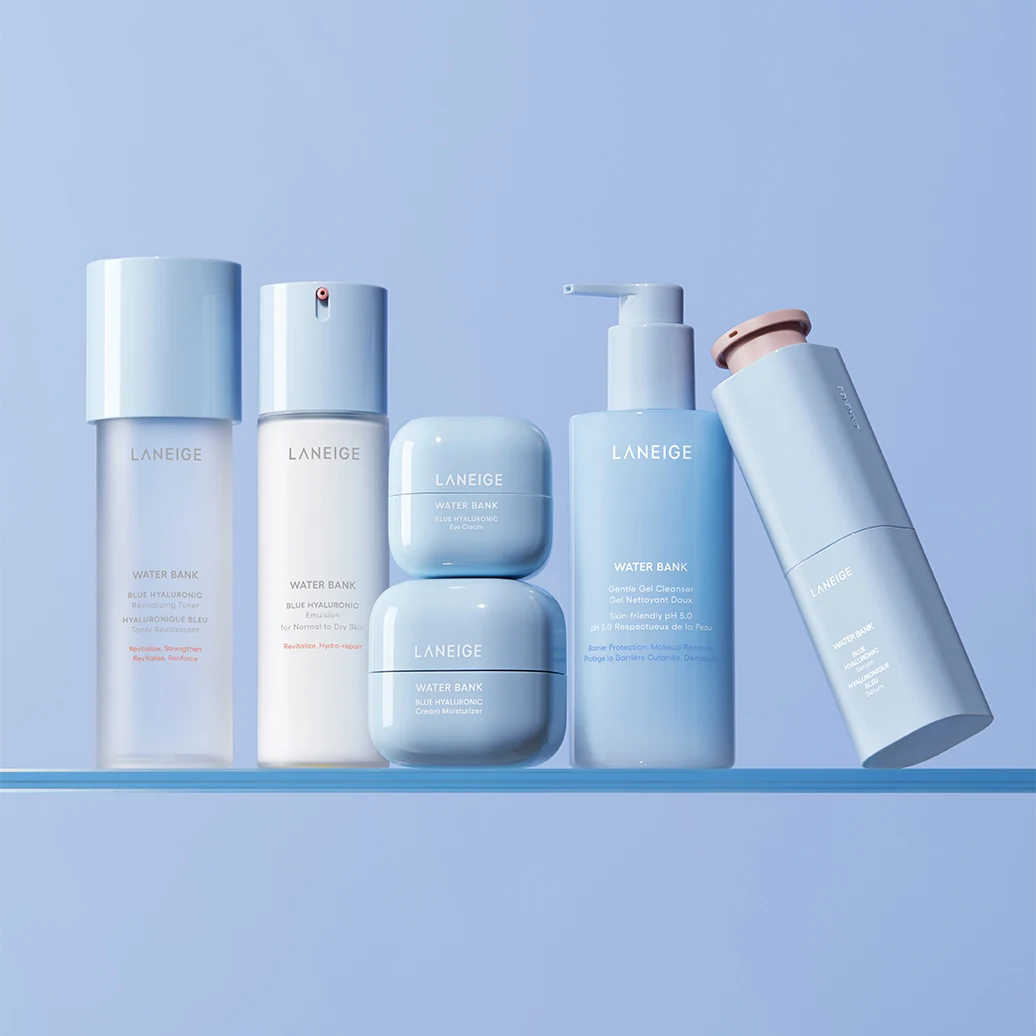
Products utilizing Hyaluronic Acid-related technology can be found in Amorepacific brands such as LANEIGE, INNISFREE, and AESTURA.

You can learn more about Amorepacific's research and development philosophy and the latest technology trends at the link below.

Explore Amorepacific Research & Innovation

Hyaluronic Acid Fact Check

We examine information about Hyaluronic Acid that is frequently misunderstood or exaggerated to gain a more balanced understanding of its characteristics as a cosmetic ingredient.

QuestionFact Check
Does Hyaluronic Acid guarantee skin regeneration?
While skin elasticity and moisturizing effects are associated with wrinkle improvement, there is no rigorous scientific evidence to fully justify this. [1] Cosmetics do not "guarantee" regeneration but can help with gradual improvement.
Can using Hyaluronic Acid cosmetics produce the effects of a procedure?
Among currently marketed topical Hyaluronic Acid products, none can completely pass through the epidermis; only injectable Hyaluronic Acid can penetrate the skin. [3] Cosmetics and procedures work in different ways.
Is Hyaluronic Acid suitable for all skin types?
The CIR Expert Panel concluded that Hyaluronic Acid, Sodium Hyaluronate, and Potassium Hyaluronate are safe as cosmetic ingredients. [2] It is suitable for most skin types, but individual results may vary depending on co-formulated ingredients.
Do I see immediate effects when I apply Hyaluronic Acid?
High molecular weight Hyaluronic Acid provides immediate hydration and smoothness. [6] Hydration can be felt relatively quickly, but improvement in firmness and skin texture requires cumulative use.
Is a higher concentration of Hyaluronic Acid always better?
Hyaluronic Acid is used in cosmetic formulations at concentrations of 0.2% to 1%. [1] Rather than concentration, the combination of molecular weights and formula design is more important to the effect.
Is Hyaluronic Acid extracted from only one source?
Cosmetic Hyaluronic Acid is obtained through rooster combs and bacterial fermentation processes, and it has the same structure regardless of its origin. [13]

How to Experience Hyaluronic Acid Benefits

  • Realistic Changes to Expect

With consistent use of Hyaluronic Acid cosmetics, you may feel your skin becoming more hydrated and less tight. Makeup may adhere better, skin texture may appear smoother, and fine lines caused by dryness may appear less prominent. As surface hydration increases, you may also experience an overall more radiant appearance. These changes are gradual and cumulative rather than dramatic.

  • Changes That Are Difficult to Expect

Fundamental improvement of deep wrinkles, permanent increase in skin volume, and procedure-level restoration of elasticity are difficult to expect from cosmetics alone. [1] For these purposes, combining other functional ingredients such as retinol and peptides, or undergoing procedures through consultation with a specialist, may be more suitable.

Safety of Hyaluronic Acid

Hyaluronic Acid is generally used safely as a cosmetic ingredient. However, as with all cosmetic ingredients, individual reactions may vary, so please refer to the following.

General Safety

Hyaluronic Acid has shown no toxicity across various species and exposure routes in numerous acute toxicity studies. No immunogenicity or sensitization has been identified, and no concerns have been reported regarding reproductive and developmental toxicity or genotoxicity. [14]

The CIR (Cosmetic Ingredient Review) program provided safety assessment documents for seven ingredients, including Hyaluronic Acid, Sodium Hyaluronate, Potassium Hyaluronate, and Hydrolyzed Hyaluronic Acid. Based on existing literature and industry-submitted data, the experts concluded that these seven ingredients are safe in cosmetics at the usage practices and concentrations reported at the time of assessment. [13]

They also noted that impurities can affect the safety of Hyaluronic Acid, depending on several factors such as the source material of the polysaccharide. [13]

When Caution is Needed

If you are allergic to a specific source material (such as that derived from rooster combs), it is advisable to check the origin of the ingredient. In 2000, 144 adverse reactions were reported out of 262,000 uses of medical Hyaluronic Acid injections, with most reactions resolving within two weeks. Most adverse reaction cases were related to injectable use for treatment purposes or tissue augmentation, with no reactions reported for topical application. [2]

Products that combine Hyaluronic Acid with other drugs or compounds may carry a possibility of irritation from the co-formulated ingredients. [14] Consultation with a specialist is recommended if you have existing skin concerns.

Frequently Asked Questions (FAQ)

What exactly is Hyaluronic Acid?

Hyaluronic Acid (HA) is a linear glycosaminoglycan (GAG), an anionic gel-form macromolecule found in the extracellular matrix of vertebrate epithelial and connective tissues. Structurally, it belongs to the family of complex linear anionic polysaccharides. [1][4] In cosmetics, it is mainly used as a moisturizer (humectant) that supplies and retains moisture in the skin.

What should sensitive skin keep in mind when using Hyaluronic Acid products?

Hyaluronic Acid itself has been evaluated as a safe cosmetic ingredient by the CIR Expert Panel. [2] However, for sensitive skin, other co-formulated ingredients (such as fragrances, alcohol, and certain preservatives) rather than Hyaluronic Acid may be the cause of irritation. It is advisable to check the full ingredient list and perform a patch test before using a new product.

What ingredients are good to use together with Hyaluronic Acid?

The properties of Hyaluronic Acid can be enhanced when used together with other bioactive ingredients such as plant extracts, vitamins, amino acids, peptides, proteins, minerals, sugars, and probiotics. [1] In particular, combinations with glycerin (moisturizing synergy), Vitamin C (tone management), Vitamin B5 (Panthenol) (soothing and moisturizing), ceramide (barrier strengthening), and niacinamide (smoothing skin texture) are frequently mentioned.

Can I use Hyaluronic Acid and retinol together?

Hyaluronic Acid and retinol can be used together in a skincare routine. Because individual skin responses vary, users should adjust the frequency of use according to their skin condition and product instructions. However, skin responses to retinol may vary depending on the product concentration, frequency of use, and individual skin condition. Since the skin needs time to adapt in the early stages of retinol use, if you feel irritation, it is advisable to use them on separate days or consult a specialist.

Can I use Hyaluronic Acid together with exfoliating ingredients (AHA/BHA)?

They can be used together, but the skin barrier may become temporarily sensitive after using AHA/BHA. While Hyaluronic Acid plays a role in replenishing moisture, if you feel irritation, it is advisable to use them on separate days or adjust the concentration.

Can I use Hyaluronic Acid products right after a procedure?

It depends on the type and intensity of the procedure and the individual skin condition. Hyaluronic Acid is generally known as a low-irritation moisturizing ingredient, but immediately after a procedure, it is safest to prioritize the guidance of your medical professional. [5]

Do pores shrink when I use Hyaluronic Acid cosmetics?

Pore size is determined by a combination of factors such as genetics, sebum secretion, and skin elasticity. By supplying moisture to the skin and smoothing its texture, Hyaluronic Acid may make pores feel "less prominent." [15] However, expecting permanent pore reduction is difficult.

When can I expect to feel the effects of Hyaluronic Acid?

High molecular weight Hyaluronic Acid provides immediate hydration and smoothness. [6] Moisture-related sensations, such as a supple feel, can be experienced relatively quickly, but improvement in firmness and skin texture is felt cumulatively through consistent use. The changes felt may vary depending on individual skin condition and environment.

What are the differences between Hyaluronic Acid and similar ingredients?

Ingredients frequently compared to Hyaluronic Acid include collagen and glycerin. Collagen is a protein that supports the skin's structure, and glycerin is a humectant that attracts moisture similarly to Hyaluronic Acid. Hyaluronic Acid is characterized by its excellent moisture-binding capacity—the ability to hold over a thousand times its own weight in water [3]—and is differentiated by the fact that its depth of skin penetration varies according to molecular weight. [1]

By what criteria should I choose Hyaluronic Acid cosmetics?

If you have sensitive skin, check the full ingredient list to see if there are any irritating ingredients. If hydration is the main goal, you may consider products that contain Hyaluronic Acid along with moisturizing ingredients such as glycerin and panthenol. The molecular weight of Hyaluronic Acid affects skin penetration and biological activity [1], so "multi-molecular-weight" products that combine both high and low molecular weight forms are also a good option.

Sources

※ The effects and technologies of ingredients described in this content are based on Amorepacific's own research and publicly available academic and scientific sources to provide a general understanding of cosmetic ingredients. It is not intended for medical diagnosis or treatment purposes. For personal medical concerns, please consult a qualified medical professional.